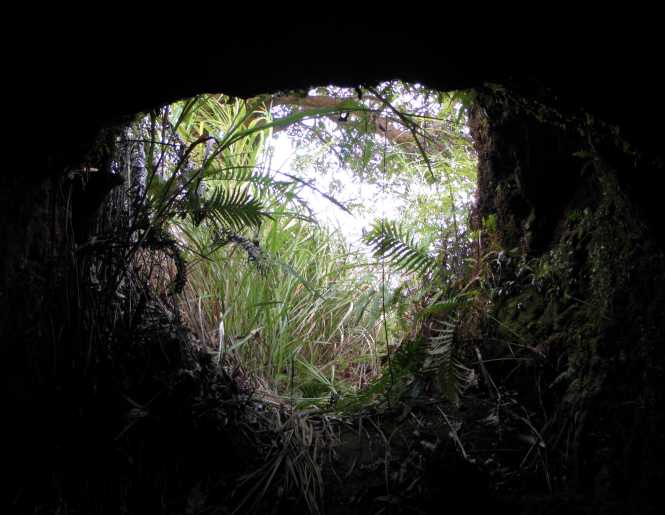
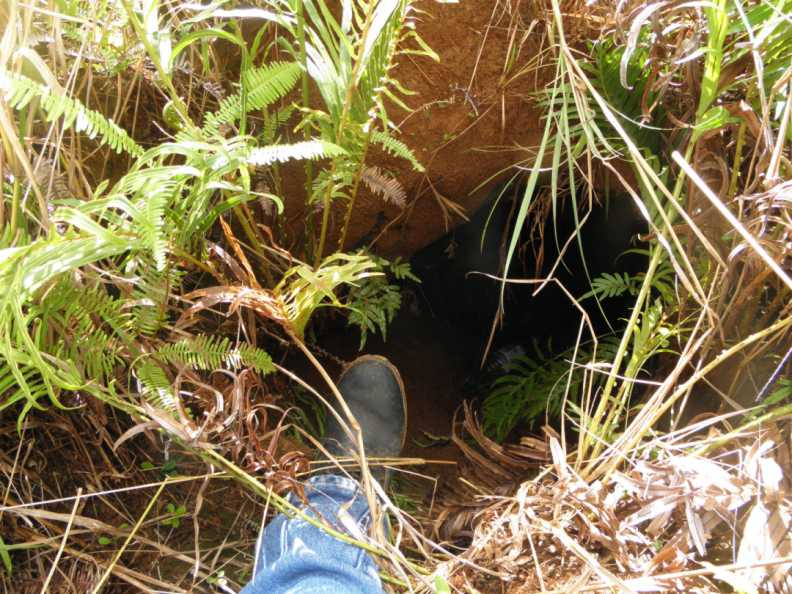
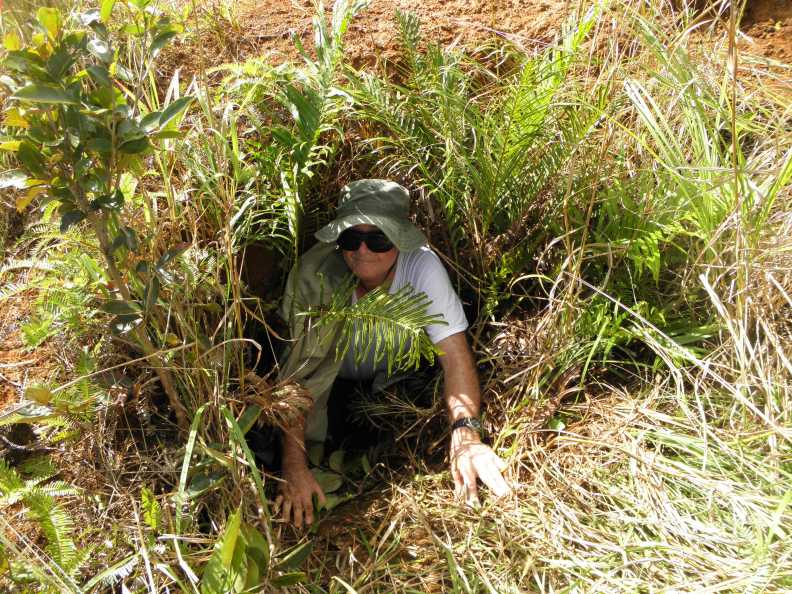
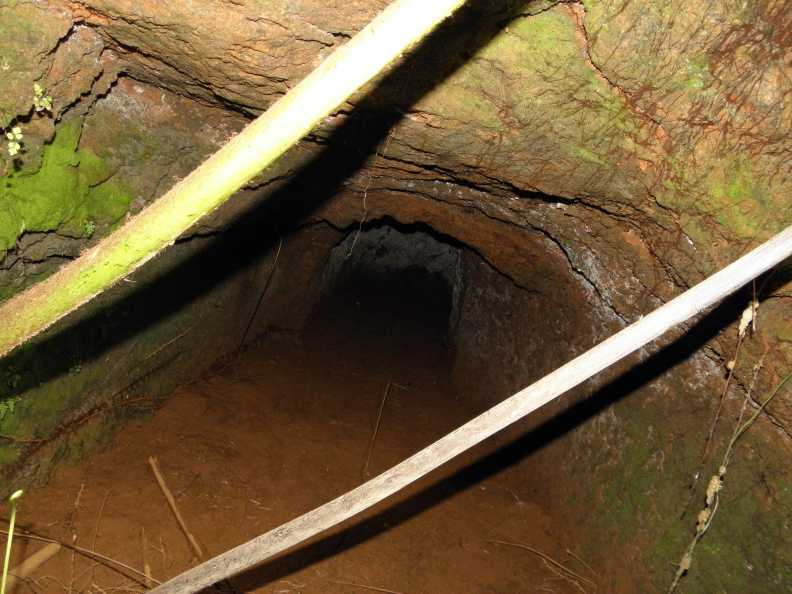
The Entrance to this cave is almost invisible, yet inside
it can be a huge maze of tunnels.

Chronology
of Japanese Hideouts after WW2
Japanese Soldiers held out in these caves
on Guam and all over the islands
of the Pacific, some even to this day.
One of these Japanese men was Shoichi Yokoi
who lived in these caves
for 28 years until Janurary 24, 1972.
He said that the only thing that
gave him the strength
to survive was the faith in himself and that he was a Japanese Soldier.
Read more
about Mr. Shoichi Yokoi here.
Read about other Japanese Soldier hideouts here.
Photos by Dan Collier
Many of Guam’s Japanese caves were hand-dug by
native slave labor, and are plentiful on Guam..
The Japanese simply LOVED
caves!
Let’s take a look in my picture files and see if I can find any
more cave photos...
Natural caves were used as well, but they
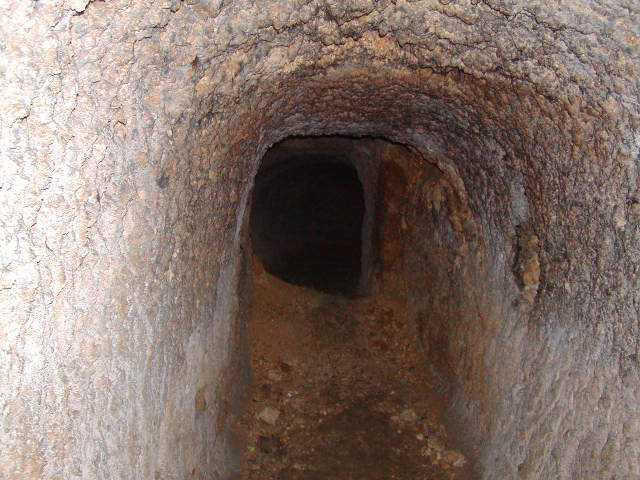
are not symmetrical, like the hand-dug ones were..
A continuous running
arc along the top of the cave, and relatively smooth side walls would
indicate a hand-dug cave, whereas a natural one would not be so uniform
internally.
.
--Dan
Notice that this Japanese Tunnel has a heart shape.
|
|
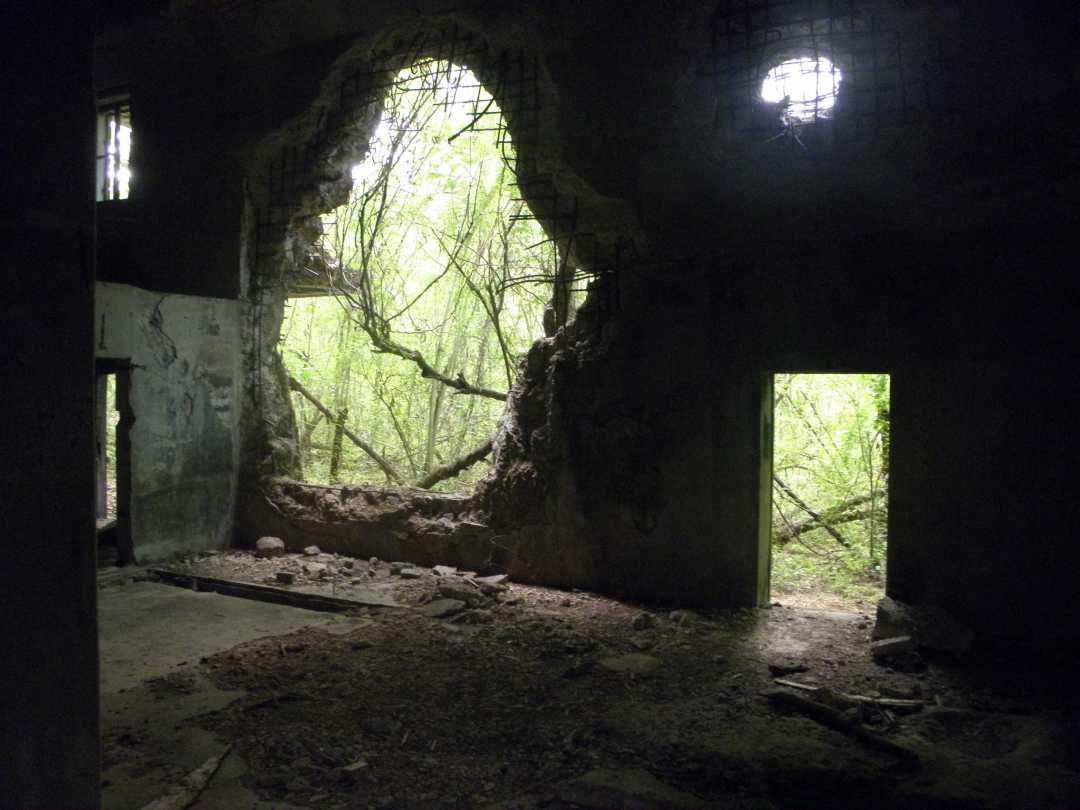
Japanese WW2 Power Station |
Guam Night Life and Entertainment
|
If anyone knows more
about this Japanese WW2 mini submarine or has any more pictures,
write me a letter at the bottom of this page. |
See the 34th Fighter
Squadron Exhibit at the Yellow Airplane Exhibit Hall.
The 34th Fighter Squadron fly's a WW2 P-47 Thunderbolt
Click on photo to see exhibit
|
 |